


Sports Betting Schedules: How to Track Events Without Missing Key Details
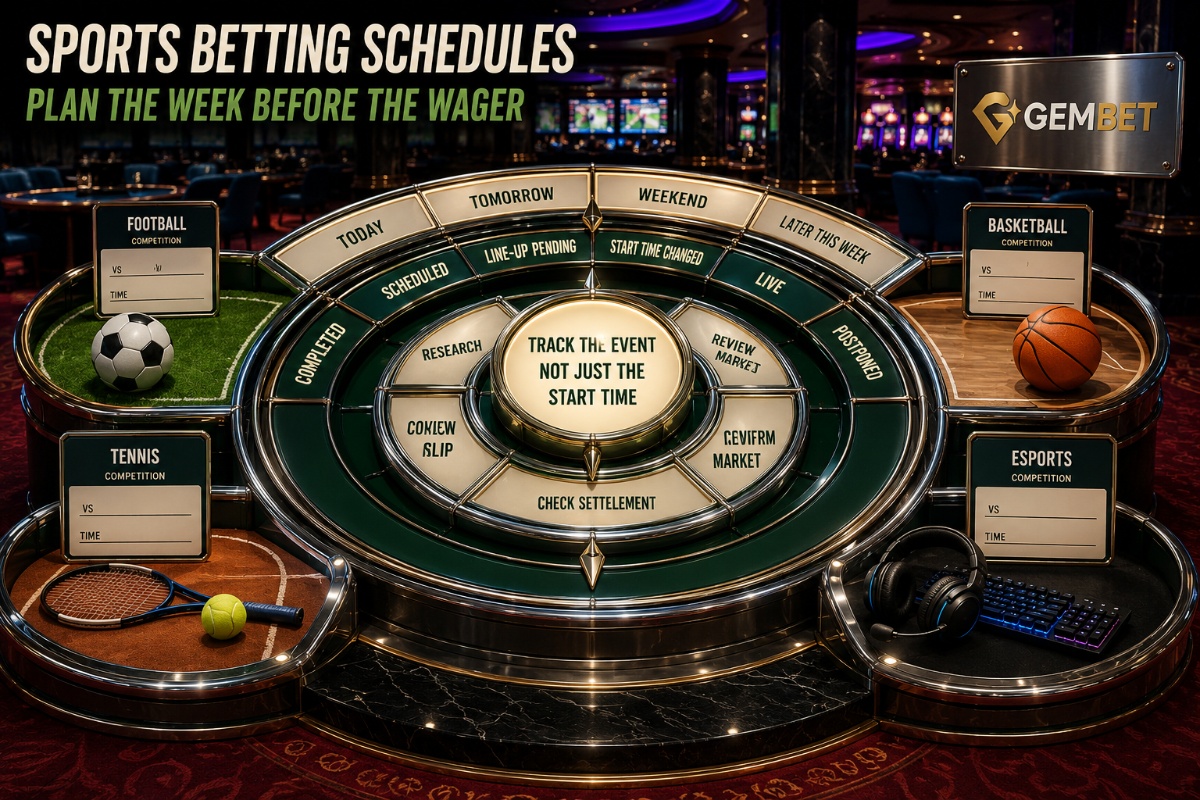
Sports betting schedules are more than lists of start times. A useful schedule tells the player when an event begins, when reliable team or player information is likely to appear, when the market should be reviewed and when the final result needs to be checked. Without that structure, a busy week of matches can turn into rushed decisions.
The aim is not to track every fixture. It is to create a smaller betting calendar containing only the events that can be followed properly from research to settlement.
Sports Betting Schedules Should Start With a Shortlist
Many event pages display dozens of sports fixtures across different countries, competitions and time zones. Adding all of them to a personal schedule creates more noise than value.
Begin by selecting the sports, leagues and tournaments already understood. A practical shortlist may contain one football competition, one basketball league, a limited group of tennis events and an esports tournament followed regularly.
Sports betting schedules work best when every listed event has a reason to be there. A familiar team name or an attractive market is not enough.
Record the Start Time in One Time Zone
Event start times can be shown in local venue time, platform time or the device’s current time zone. Travelling, using a VPN or changing device settings can make the same fixture appear differently.
Choose one reference time zone for the betting calendar and use it consistently. Before planning around an event, confirm whether the displayed time has already been converted.
This is especially important for overnight football, international basketball, global tennis tournaments and esports competitions hosted in another region.
Separate the Fixture Time From the Research Deadline
Sports betting schedules should not treat kick-off, tip-off or first serve as the only important time. Research often needs to finish earlier.
For each event, add a research deadline. This is the point when the player should already understand the competition format, likely participants, market type and main uncertainty.
A simple schedule may look like this:
- Event starts at 20:00.
- Initial research ends at 14:00.
- Team-news check happens at 18:45.
- Final market review happens at 19:15.
- No new decision is made after 19:45.
The exact times will vary, but the separation prevents a late search from becoming a rushed wager.
Know When Important Information Usually Arrives
Different sports release key information at different stages. Football line-ups may appear close to kick-off. Basketball availability can change during the day. Tennis scheduling may depend on earlier matches, weather or court availability. Esports rosters and maps may be confirmed shortly before a series.
Sports betting schedules should include the expected information window, not merely the event start.
If the analysis depends on a line-up, player status or map selection that has not been confirmed, mark the event as pending rather than pretending the missing information does not matter.
Use Status Labels Instead of Relying on Memory
A clear betting calendar should show where every event stands. Useful status labels include:
- RESEARCH NOT STARTED
- RESEARCH COMPLETE
- WAITING FOR NEWS
- MARKET UNDER REVIEW
- NO BET
- WAGER OPEN
- LIVE
- SETTLED
- REVIEW NEEDED
These labels make sports betting schedules easier to manage because the player does not need to reconstruct the purpose of every saved fixture.
Check for Rescheduling Before Confirming
Sports fixtures can move because of weather, venue changes, broadcast requirements, travel problems, tournament delays or earlier matches running long.
Before acting on an event, confirm the current date, start time, venue and status through a dependable source and the platform event page.
A postponed event may remain listed under its original day for a short period. A tennis match may move to another court, while an esports series may be delayed by technical issues. Sports betting schedules should therefore be treated as working plans rather than permanent records.
Do Not Mix Pre-Match and Live Tasks
A pre-match routine and a live betting schedule require different attention.
Pre-match planning allows time to compare event context, team news, market wording and price. Live betting happens while the score, clock and lines are changing. Trying to research several future fixtures while following one live event can reduce accuracy in both tasks.
Block live events separately. During that period, avoid adding unrelated matches to the bet slip simply because they begin nearby.
Build a Weekly Event Board
Sports betting schedules become more useful when the full week is visible at once. Divide the betting calendar into days, then place each selected fixture under the correct date.
For every event, record:
- sport and competition;
- participants;
- local start time;
- research deadline;
- expected team-news or roster update;
- market being considered;
- current status; and
- settlement review time.
Limit the number of events per day. A schedule containing eight fixtures is not useful when only two can be reviewed properly.
Use Gembet to Confirm the Event Path
Gembet can help players move from the selected sport to the competition, fixture and market, but the platform list should be matched against the personal schedule before any wager is opened.
Confirm that the event shown on Gembet has the same participants, competition, date and period recorded in the weekly plan. Similar names can appear across reserve teams, youth fixtures, women’s competitions, esports simulations or different tournament stages.
The event path should be clear before the market reaches the bet slip.
Set Match Reminders for Information, Not Excitement
Match reminders are most useful when they prompt a specific action. Instead of setting only a start-time alert, create reminders for:
- checking the confirmed line-up;
- reviewing an injury update;
- confirming the venue;
- checking whether a market is still available;
- reviewing settlement after the event.
A reminder should help complete the plan, not create pressure to place a wager before the event begins.
Leave Space Between Events
Back-to-back fixtures can create rushed settlement checks and overlapping live decisions. Sports betting schedules should include gaps for reviewing the previous event before moving to the next one.
If one basketball match finishes shortly before a football fixture begins, decide in advance whether both can receive enough attention. If not, keep only one.
The number of available events does not increase the amount of useful attention available.
Track Open Wagers Separately From Future Fixtures
A future-event list should not be mixed with already committed wagers. Use a separate section for open selections showing:
- event and market;
- stake;
- scheduled start;
- current status;
- expected settlement time; and
- whether any rule may delay settlement.
This prevents the same event from being treated as both a research task and a fresh opportunity.
Schedule the Settlement Review
Sports betting schedules should continue after the final whistle, buzzer or map. Add a settlement review so the result can be compared with the exact market.
A football team may advance but fail to win in regulation. A basketball result may include overtime. A tennis market may be affected by retirement. An esports map may be remade or voided.
Check the settled selection against the period, line and sport-specific rule rather than relying only on the headline result.
What Should Happen When an Event Is Postponed?
Do not immediately remove the event or assume the wager is void. Mark it as postponed and check the applicable rules.
The platform may keep the selection open if the fixture is completed within a stated period. Other markets may settle differently depending on how much of the event was played.
Sports betting schedules should record the new status and the next time the issue needs to be reviewed. Repeatedly refreshing the event page does not make the decision clearer.
Common Questions About Tracking Schedules
How many events should be tracked in one day? Only as many as can be researched, reviewed and settled accurately. For many players, one or two is enough.
Should every scheduled event lead to a wager? No. A fixture can remain on the research list and later be marked “no bet”.
Are calendar reminders enough? They help, but event changes should still be verified through current sources.
What if two events overlap? Choose the one that can be followed properly or treat both as pre-match decisions without attempting live activity.
Can a delayed match be replaced with another wager? It can, but the replacement should be researched independently. The unused budget does not create a reason to bet.
Create a Schedule That Makes Skipping Easy
The best sports betting schedules do not simply help players find events. They make it easier to remove events when information is incomplete, times change or too many fixtures overlap.
Use Gembet as the final event and market checkpoint after the personal schedule has identified what deserves attention. Keep start times, research deadlines, line-up checks, open wagers and settlement reviews in separate stages.
A schedule is working when fewer events feel urgent and every tracked fixture has a clear next action. The goal is not to fill the week with wagers. It is to make each decision easier to understand before the event begins.
Highest odds in SG for EPL & Champions League. 5-minute fast payouts via PayNow.

